
Tet II: Tet
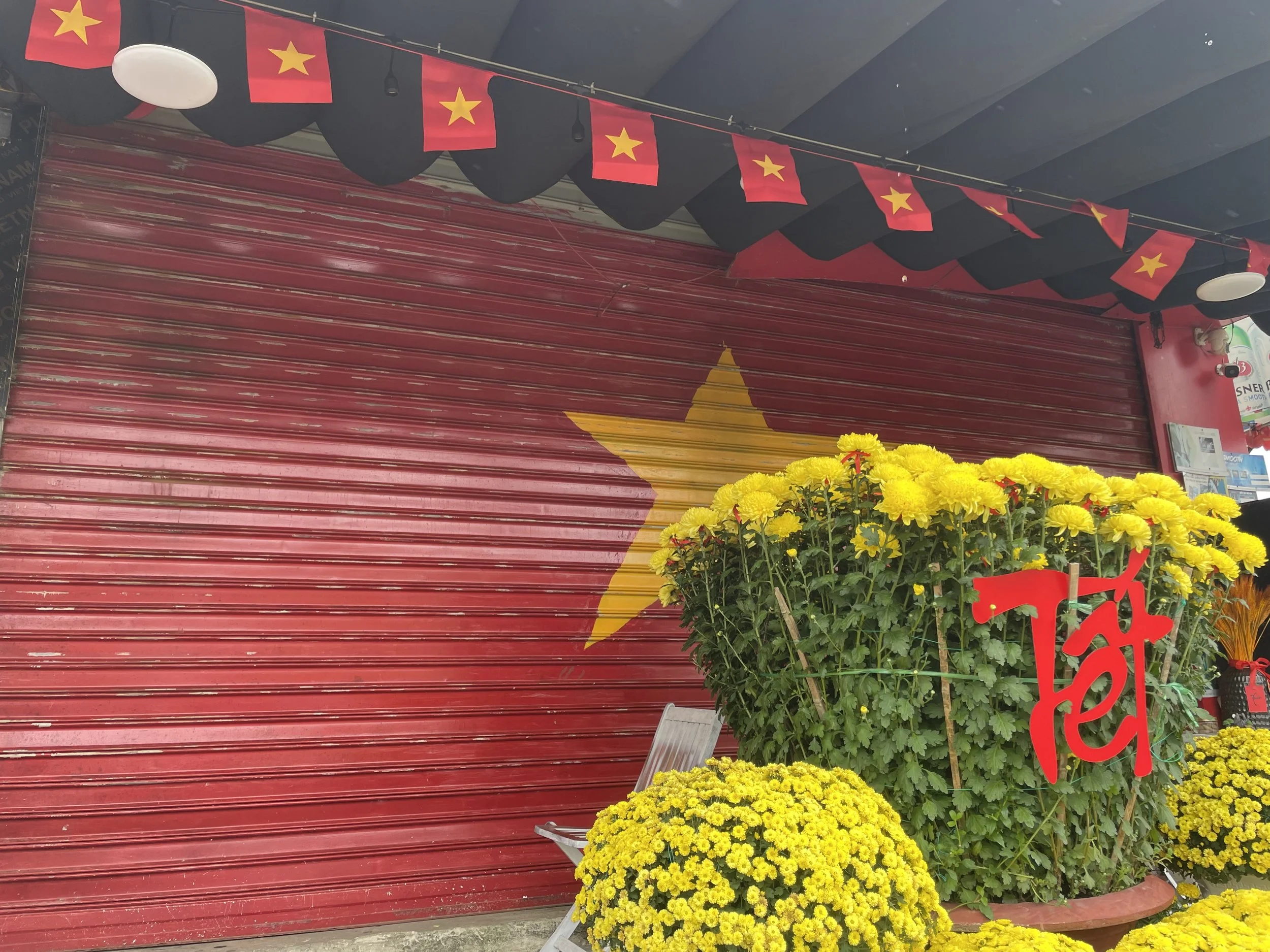
Closed for Tet
Tet was an interesting experience, given that we are on the periphery of Vietnamese culture; closer than tourists but still very-much on the outer hinterland, which is to be expected. Anecdotal knowledge gleaned from people within the community who have experienced Tet before varied greatly, which led us to believe it would be either reminiscent to a zombie apocalypse, where the poor white westerners would be scrabbling around for grains of rice on the streets for the duration, or alternatively it would be business as usually, just with a tad more karaoke.
The truth was somewhere in the middle, at least here in Hoi An. Apparently in smaller towns and villages outside of major conurbations you really would find eerie scenes of desolation, but given that Hoi An is a major tourist town, many locals stayed for the duration.
Tet is the most important holiday in Vietnam, the lunar new year. Essentially it’s their value of Christmas and New Year’s all rolled into one. And just like Christmas in the West, traditional practices collide with contemporary trends, innovations in technology and individual preferences. Some of the most common aspects of Tet is the giving of money in special red envelopes (the colour red symbolises good luck), from older people to the young, to wish them health and success (as visitors, we were encouraged to join-in with this practice, and did so with the family of the first landlord we had). People also display bright yellow apricot blossoms, and the sight of trucks, trailers or even adapted scooters carrying big pots of kumquat trees, the small orange balls bouncing in transit, is a common one. The kumquats (I mistakenly thought they were satsumas) represent wealth, whilst the tree itself symbolise longevity and luck, and are usually placed at the entrance to a property. And the flags are everywhere. Outside of people’s houses, bunting strung up across roads — a combination of the Vietnamese flag (surely one of the coolest flags) as well as the communist hammer-and-sickle motif, bringing cheerful USSR flashbacks. Tet is officially a three-day celebration, but usually extends to a week. Some shops and restaurants are closed for a few days either side of this, whereas some are open throughout.
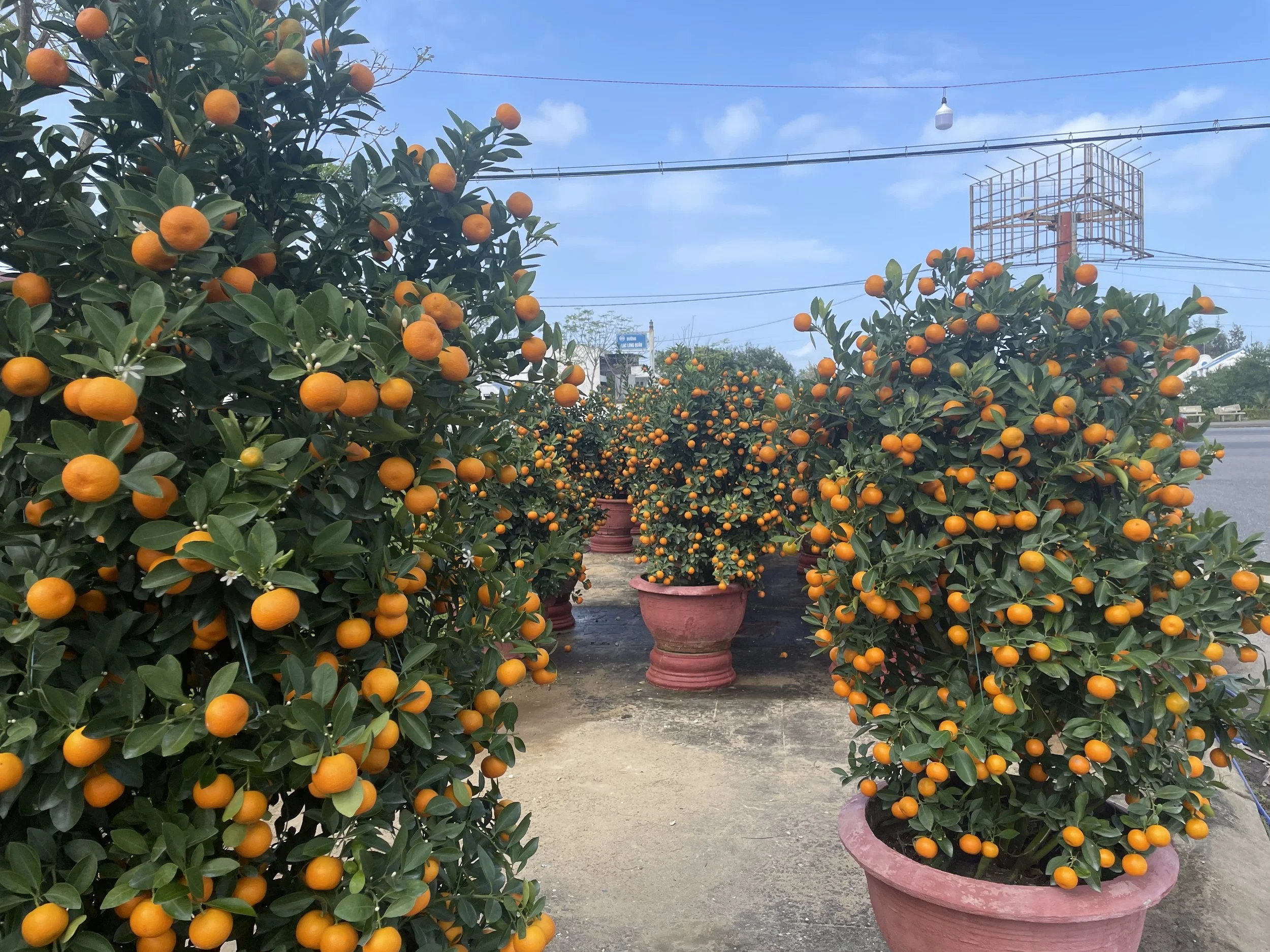
Kumquat Trees
In the end, I suppose, when viewed from the outside-in, as we are in this culture, Tet came and went in a fluttering blaze of coloured bunting, yellow kumquat trees, intermittent fireworks and karaoke. It was good to witness it firsthand, as a few years before when traveling around India we had experienced Diwali in Udaipur and Jodhpur, which was (as India is in general) a lot more intense, a lot more urgent. Tet was a time of celebration but also of rest, and reflection.
It was a pause, a deep breath before plunging into a new year.
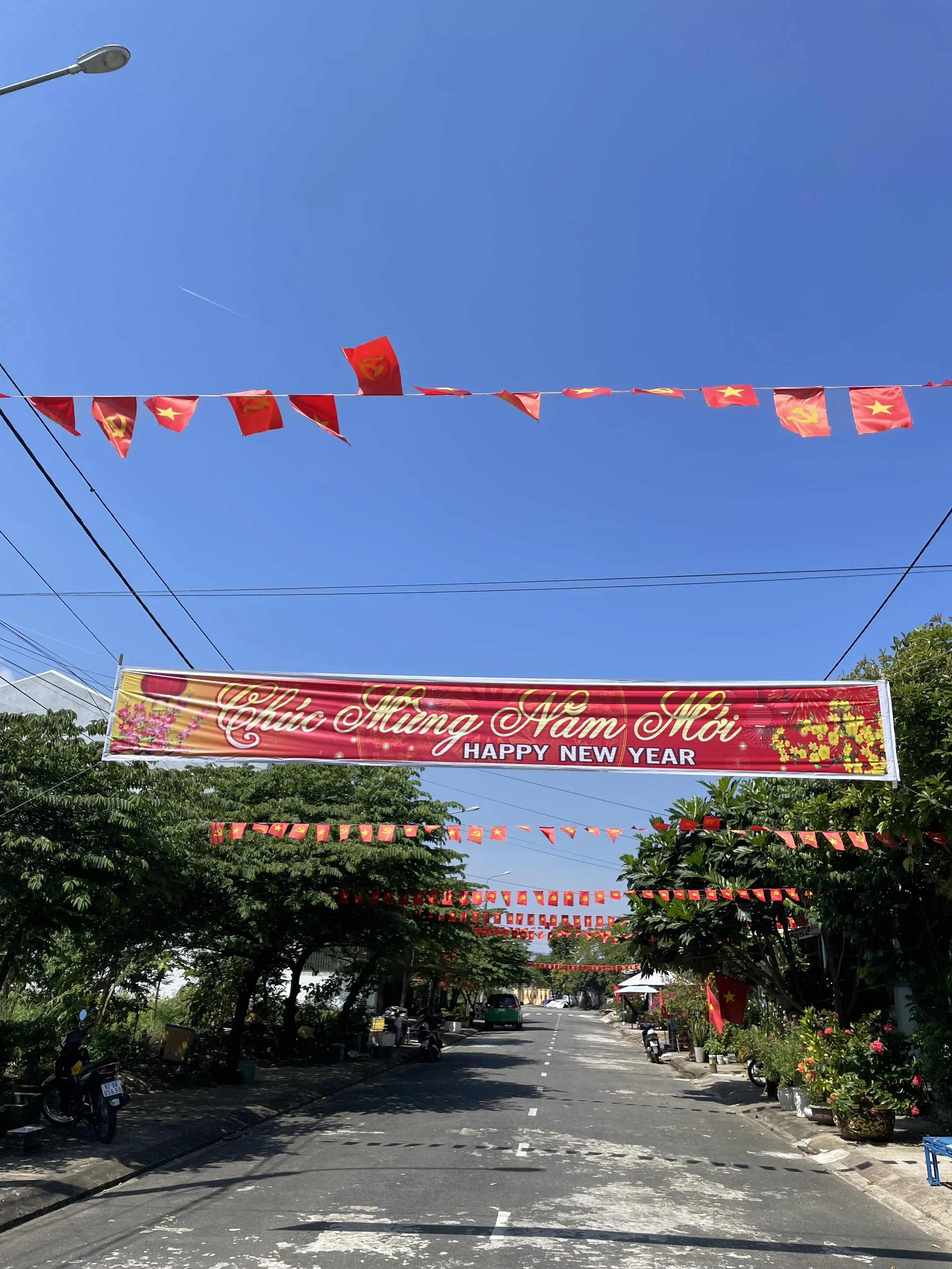
CHÚC MỪNG NĂM MỚI!